2026 Best Paper Food Container Solutions for Global Buyers?

Time:2026-06-16 Author:Mason
0%

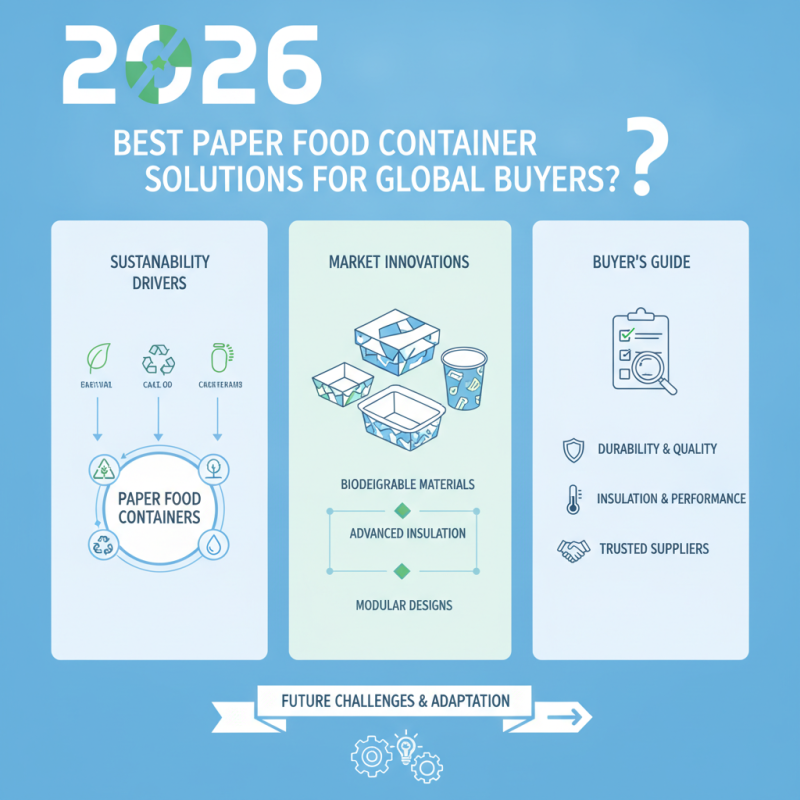
As the demand for sustainable packaging rises, paper food containers have gained significant popularity. These containers offer environmentally friendly alternatives to plastic. They are biodegradable, recyclable, and reduce carbon footprints. The 2026 market will witness innovative designs and functionalities in paper food containers.

Global buyers seek reliable solutions that combine quality and affordability. Various manufacturers are responding to this need. Each company brings unique materials and designs to cater to diverse culinary trends. However, quality can vary. It's essential for buyers to assess durability, insulation properties, and overall performance.

To ensure consumer satisfaction, thorough research is crucial. Buyers should consider the source of materials. Engaging with trusted suppliers fosters confidence in product integrity. The evolution of paper food containers reflects a commitment to sustainability. Yet, challenges remain. Manufacturers must continually adapt and improve to meet ever-changing market demands.
2026 Best Paper Food Container Solutions for Global Buyers?

2026 Trends in Eco-Friendly Food Container Solutions for Global Markets

The demand for eco-friendly food container solutions is on the rise. According to a recent report by the Global Green Packaging Market, the eco-friendly packaging sector is expected to grow by 5.1% annually through 2026. This trend is driven by increasing consumer awareness of environmental issues. As consumers become more eco-conscious, they prefer biodegradable and recyclable options. However, challenges remain in material sourcing and production processes.


Innovative materials are emerging in the eco-friendly food container market. Plant-based plastics, for example, are gaining traction. They offer sustainable alternatives without sacrificing functionality. A report from the Food Packaging Forum highlights that around 40% of consumers are willing to pay more for sustainable packaging. This shift indicates a strong market potential for businesses focusing on green solutions. However, balancing cost and sustainability remains a significant hurdle.


Packaging waste continues to be a pressing global issue. Over 300 million tons of plastic are produced every year, leading to pollution and environmental degradation. Companies are now looking for ways to minimize this impact. Some strategies include using renewable resources and reducing single-use packaging. While progress is being made, industry experts suggest a persistent need for innovation and collaboration among stakeholders.

Innovative Materials: Bioplastics vs. Traditional Plastics in Food Packaging

The shift towards innovative materials in food packaging is crucial. Bioplastics are often hailed as eco-friendly alternatives to traditional plastics. They are derived from renewable sources like corn and sugarcane. In fact, the global bioplastics market is expected to reach $35 billion by 2026, according to industry reports.

Bioplastics offer compostability under certain conditions. They reduce reliance on fossil fuels, but not all bioplastics decompose as expected. Some still require specific industrial environments to break down. Research shows that while 60% of consumers support bioplastics, awareness levels remain low, leading to confusion over their benefits.

Traditional plastics remain dominant due to their versatility and cost-effectiveness. In 2022, around 368 million tons of plastic were produced globally, with significant amounts used in food packaging. However, the environmental impact is staggering. Transitioning to bioplastics must address these challenges. Stakeholders need to educate consumers on proper disposal methods. Balancing innovation with practicality is essential for the industry’s future.

Consumer Preferences: The Shift Towards Sustainable Food Packaging Options

Sustainability is changing the food packaging landscape. Consumers now prefer eco-friendly options. The demand for biodegradable containers is rising. Many choose materials that are compostable or recyclable. This shift highlights a growing awareness of environmental impact.


Tips: When selecting packaging, consider materials like plant-based plastics or recycled paper. Always check for certifications that verify sustainability claims. Educating yourself on the life cycle of packaging materials can make a difference.


Companies need to adapt to this trend. Designing packaging that safeguards food while being environmentally conscious is vital. There can be challenges, like sourcing sustainable materials. Not all options are affordable, and some may not perform as well. It's important to balance cost, function, and eco-friendliness in packaging decisions.

Market Analysis: Growth Projections for Food Container Solutions by 2026

The food container solutions market is projected to grow significantly by 2026. According to industry reports, this sector is expected to reach USD 27 billion, driven by increasing consumer demand for sustainable options. A rising awareness of food safety is also influencing buying decisions. This trend suggests a remarkable shift towards eco-friendly materials.

Research indicates that over 50% of consumers are prioritizing biodegradable and reusable containers. There is a growing trend in meal kits and food delivery services, contributing to an increased need for innovative packaging. However, challenges remain in balancing affordability with sustainability.

Many manufacturers will need to innovate and adapt to meet these demands. Providing reliable solutions that align with consumer values can help companies succeed. The industry must address sourcing issues and the lifecycle impact of their products. Continuous improvement in quality and function is necessary for brands to stay competitive. These factors will shape the future of food container solutions in the global market.

Regulatory Impact: How Global Policies Shape Food Container Innovations

As global policies evolve, their influence on food container innovations becomes clearer. Regulations often dictate the materials used. Sustainable practices are now a standard requirement, pushing manufacturers to explore biodegradable options. This shift not only meets consumer demand but also satisfies regulatory standards.

Tips: Always check local regulations. Understand what materials are accepted. Adaptability is key for manufacturers.

Additionally, safety regulations are stringent in many regions. Containers must resist temperature fluctuations and prevent spoilage. These demands can lead to higher production costs. Innovation can be a double-edged sword; while it spurs creativity, it may also strain smaller companies.

Embracing eco-friendly solutions can sometimes feel overwhelming. Yet, it’s essential to embrace change for long-term benefits. This journey is not just about compliance; it is about responsibility towards consumers and the environment.

2026 Food Container Solutions: Innovations by Material Type

FAQS

: What are bioplastics made from?

: Bioplastics are made from renewable sources like corn and sugarcane.

Are bioplastics fully compostable?

Not all bioplastics decompose easily. Some require specific conditions to break down.

Why do traditional plastics remain popular?

Traditional plastics are versatile and cost-effective. They are still dominant in food packaging.

What is the projected market growth for food container solutions by 2026?

The market is expected to reach USD 27 billion by 2026.

How do consumer preferences influence packaging choices?

Over 50% prioritize biodegradable and reusable options. Awareness is growing rapidly.

What challenges do companies face in sustainable packaging?

Companies must balance affordability with sustainability and address sourcing issues.

How can stakeholders improve consumer awareness?

Education on proper disposal methods is key to helping consumers understand bioplastics.

What trends are affecting food packaging solutions?

Meal kits and food delivery services are driving demand for innovative packaging.

Why is continuous improvement important for brands?

Brands need to improve quality and function to remain competitive in the market.

Is there confusion about bioplastics among consumers?

Yes, low awareness levels lead to confusion about the benefits of bioplastics.

Conclusion

The article titled "2026 Best Paper Food Container Solutions for Global Buyers" explores the evolving landscape of eco-friendly food packaging, particularly focusing on paper food containers. As consumer preferences increasingly shift towards sustainable choices, the demand for innovative materials such as bioplastics in comparison to traditional plastics is highlighted.

Through market analysis, the article outlines growth projections for food container solutions by 2026, emphasizing the significance of adapting to global trends in sustainability. Furthermore, the influence of regulatory policies on driving innovation in food container solutions is discussed, underscoring the importance of compliance in fostering advancements in eco-friendly packaging. Overall, the insights provided shed light on how paper food containers are becoming a preferred option for environmentally conscious consumers and businesses alike.

Mason

Mason

Mason is a seasoned marketing professional with a deep expertise in the company's offerings and a passion for driving brand awareness. With a strong background in digital marketing strategies, he has an innate ability to connect with diverse audiences and effectively communicate product benefits.......