Choosing a supplier for Double Side Pe Coated Paper involves more than comparing quoted prices. The paper must suit its intended use, coating requirements, printing process, and delivery schedule. A sample that looks smooth under office lighting may behave differently on a fast press or after folding. Small details matter.
China has a broad paper-converting and manufacturing sector, but suppliers do not all offer the same capabilities. Some focus on packaging grades, while others provide customized coating, sheet sizes, or export support. This guide introduces ten manufacturers to consider and outlines practical points for comparing them. Company profiles should be checked against current product specifications, certifications, production capacity, and customer references; these can change over time.
No ranking can perfectly fit every buyer. A large factory may not be the best match for a small trial order, and a low price may hide longer lead times or limited customization. Ask for technical data and physical samples. Check coating weight, paper basis weight, surface consistency, and performance in your own printing or converting tests. Then discuss minimum order quantities, packaging, and shipment terms directly with the supplier. A little caution helps. The information here is a starting point, not a substitute for verification. Manufacturers’ claims deserve careful review, and even useful comparisons can miss details that only emerge during production.
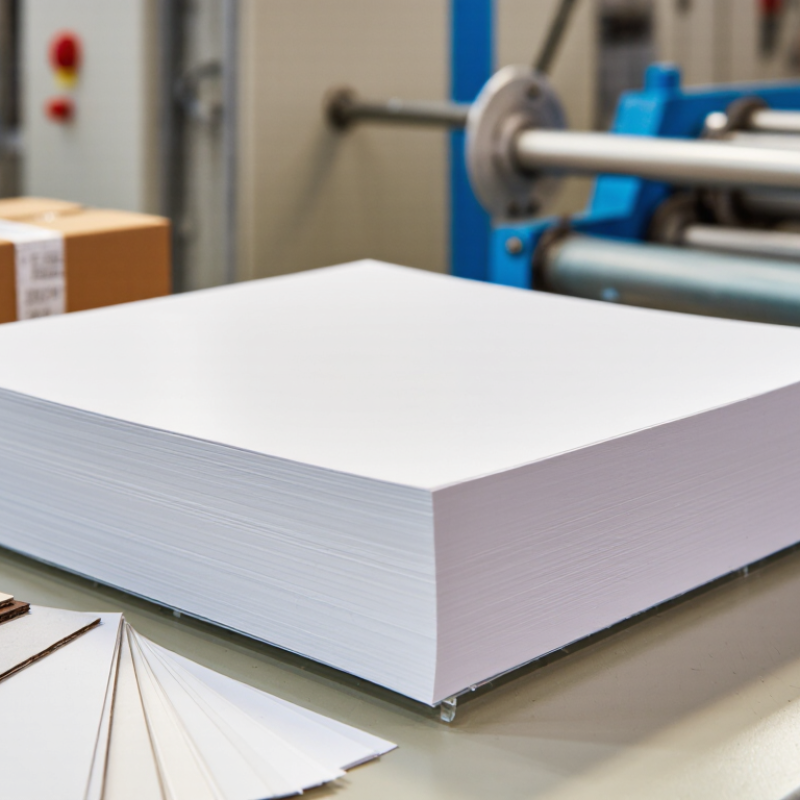
Double-side PE-coated paper is a paper sheet with a thin layer of polyethylene on both faces. The paper provides stiffness and a printable surface; the coatings help resist moisture and grease. A cup or food tray may feel dry outside while holding damp contents inside. That protection has limits. It does not make every grade suitable for hot liquids, freezing, or prolonged contact with oily foods, so buyers should check the intended-use specification.
Coating weight, paper grammage, and sealing conditions affect performance. Too little coating can leave pinholes; too much may complicate repulping. The distinction matters. FAO’s 2022 Forest Products Statistics report puts global paper and paperboard production at roughly 401 million tonnes, but that broad category does not isolate PE-coated grades. The figure signals the scale of the paper supply chain, not the size of this niche. In practice, converters should assess barrier tests and converting trials, rather than rely on the coating label alone. Recyclability also depends on local collection and processing; a paper-heavy structure is not automatically easy to recycle.
How Is Double-Side PE-Coated Paper Made?
Double-side PE-coated paper begins with a clean, dry base-paper roll. Its weight, smoothness, and moisture level affect how evenly the coating bonds. Operators unwind the paper under controlled tension, then guide it through an extrusion-coating line. Here, polyethylene pellets are melted and pushed through a narrow die as a thin, continuous curtain. The paper passes beneath this curtain, and pressure helps the molten layer adhere to one surface.
Next, the coated web may be turned and sent through a second coating station, or processed on a line designed to coat both sides. Chill rolls cool each layer quickly, giving it a smooth finish. Cooling matters. Too little control can cause wrinkles, uneven thickness, or weak bonding. Small process variations still happen, so inspection is essential.
Technicians check coating weight, surface coverage, roll appearance, and adhesion. Samples may be cut and tested to see whether the polyethylene peels away too easily. They also examine edges and pinholes, which can affect moisture resistance. For buyers comparing manufacturers, asking about these checks is more useful than relying on a glossy sample alone. A sample can look perfect. Production consistency takes closer scrutiny.
Assessing a double-side PE coated paper manufacturer takes more than comparing quoted prices. Ask for the paper’s base weight, coating weight on each side, and permitted tolerance ranges. Request a recent technical data sheet, then check that the figures match the grade you plan to buy.
A useful sample should show an even surface, clean edges, and no visible coating streaks. Test it under your actual printing, sealing, or food-contact conditions where applicable. A sample can look excellent and still behave differently on a production line.
Verify how the supplier controls production. Ask how often coating thickness, moisture, and bond strength are checked, and whether test records can be linked to a specific batch. Request photos or a live video of the coating and slitting equipment, but treat these as supporting evidence, not proof on their own.
Clarify minimum order quantities, lead times, packaging, and how defects are handled. Get tolerances and inspection terms in writing. Then compare the same grade and delivery terms across suppliers.
A factory visit or independent inspection can reveal practical details, such as storage conditions and roll protection. Look closely.
Damp corners matter.
Communication is also part of the assessment: does the sales team answer technical questions clearly, or only promise low prices? I would not rely on a single sample or one polished audit report. Suppliers can have uneven production days, and that possibility deserves a candid discussion before ordering.
China’s Top 10 Double-Side PE-Coated Paper Manufacturers should be assessed by more than coating weight or quoted price. Buyers can compare paper grammage, polyethylene coating on both surfaces, moisture resistance, seal consistency, and food-contact documentation where relevant. Ask for recent test results and production samples. Check the cut edge, too: uneven coating can show there.
Scale matters, but it does not prove quality. The China Paper Association reported that China produced 127.05 million tonnes of paper and paperboard in 2023, reflecting a large, varied supply base. A ranking of ten manufacturers may change with product grade, capacity, and verification method. That limitation matters. A useful supplier review should examine coating uniformity, dimensional stability after forming, delivery records, and traceability—not just annual output. The FAO’s 2022 forest-products statistics also place global paper and paperboard production at roughly 401 million tonnes, underscoring the sector’s size while offering no direct measure of PE-coated grades. Ask suppliers to clarify whether their figures refer to total paper capacity or double-side-coated output. That distinction is easy to miss.
Double-side PE-coated paper manufacturers differ less by headline coating weight than by how their grades perform in real use. Food-service grades need a continuous barrier on both faces, clean converting, and reliable heat sealing. They suit cups, trays, and takeaway cartons. Heavier, stiffer stock can support formed packaging, while lighter grades may reduce material use but require careful line testing. Small differences matter: a damp carton edge can soften during filling.
Application fit also depends on the base paper, coating uniformity, and printing surface. Buyers should compare basis weight, coating weight on each side, seal temperature, and resistance to water or grease using the same test methods. FAO reported global paper and paperboard production of about 401 million tonnes in 2022, illustrating the scale of the wider paper industry, not the PE-coated segment specifically. That distinction matters. Broad market totals cannot confirm a supplier’s capacity or grade performance. Ask for recent test data and samples from the intended production lot; specifications alone can look reassuring, yet still miss issues on a fast packaging line.
Indicative base-paper grammage ranges used across common double-side PE-coated paper applications. Actual specifications vary by product design, coating weight and end-use requirements; this chart does not rank manufacturers.
It is base paper coated with a thin polyethylene layer on both surfaces. The coating can help resist moisture and support sealing.
Paper unwinds under controlled tension. Molten polyethylene passes through a narrow die and bonds to one side. The web is then turned or coated on a second station.
Chill rolls cool each layer quickly and help create a smooth finish. Poor control can leave wrinkles, uneven thickness, or weak bonding.
Technicians inspect coating weight, surface coverage, edges, and pinholes. They may also test whether the coating peels away too easily.
Request base-paper weight, coating weight for each side, tolerance ranges, and a recent technical data sheet. Match the figures to the exact grade.
No. A sample may look perfect but behave differently on a production line. Test it under your actual printing or sealing conditions.
Ask about inspection frequency, test records, batch traceability, lead times, packaging, and defect handling. Get tolerances and inspection terms in writing.
It may show storage conditions, roll protection, and production equipment. Damp corners matter. Photos and videos help, but they are not proof alone.
No. Scale does not prove coating uniformity or delivery performance. Ask whether stated capacity covers all paper products or double-side-coated output.
Rankings depend on grade, capacity, and verification methods. A single ranking may miss differences in coating quality, traceability, or production consistency.
This article explains what Double Side Pe Coated Paper is and how a polyethylene layer on each side can help improve moisture resistance, strength, and suitability for food packaging and other everyday uses. It outlines the main production stages, from selecting the paper base and applying the coating to bonding, finishing, and quality checks. Readers will also learn which practical factors to consider when assessing manufacturers in China, including production capabilities, material consistency, customization options, communication, and quality control.
The article then presents an overview of ten Chinese manufacturers without focusing on brand promotion, and compares the kinds of products and applications manufacturers may support. By considering coating characteristics, paper specifications, intended use, and service capabilities, buyers can better understand how suppliers differ and identify options that match their packaging requirements.
UPG International