Top 10 Food Grade PE Paper Types for Global Buyers

Time:2026-10-19 Author:Sienna
0%

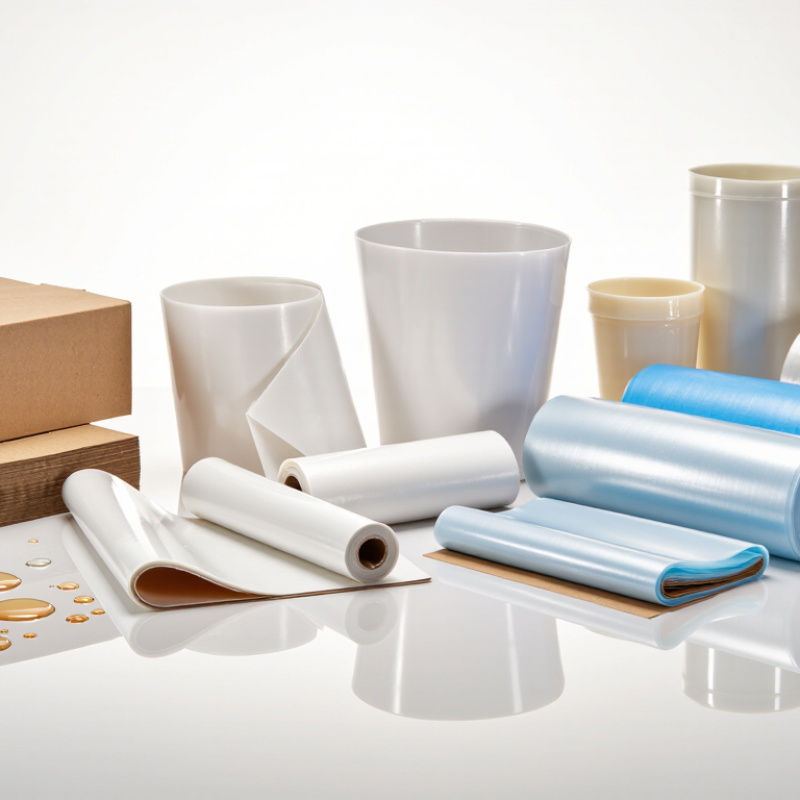
Food Grade Pe Paper is becoming a practical material for cups, takeaway boxes, bakery wraps, and dry-food packaging. Its paper base offers printability and stiffness. Its polyethylene layer improves resistance to water, grease, and short-term heat.

Market growth supports this attention. Grand View Research reports that the global food packaging market was valued at approximately USD 562.3 billion in 2022. It also projects continued expansion through 2030. Smithers’ packaging forecasts highlight rising demand for lighter structures, improved barrier performance, and more responsible material use. These trends matter to buyers comparing coating weight, paper basis weight, sealing behavior, and end-use safety.

Details decide performance.

The ten Food Grade Pe Paper types in this guide reflect common purchasing needs. They include coated kraft papers, bleached papers, cupstock, high-barrier grades, and options designed for selected recycling systems. Buyers should examine migration testing, odor transfer, moisture resistance, and supplier traceability. FDA food-contact requirements, EU Regulation (EC) No 1935/2004, and local standards may differ by market and application. Compliance must be verified for the finished structure, not only the paper sheet.

A glossy surface does not guarantee food safety. Nor does “recyclable” guarantee local recovery. Recycled fiber may need additional controls, especially for direct-contact packaging. This guide therefore treats supplier documentation as essential evidence. It also recognizes a limitation: no single paper grade wins everywhere. Manufacturing conditions, filling temperature, storage humidity, and regional recycling infrastructure can change the best choice.
Top 10 Food Grade PE Paper Types for Global Buyers

Food-Contact Rules: FDA 21 CFR 176.170 and EU 1935/2004

Top 10 Food Grade PE Paper Types for Global Buyers

Food-grade PE paper includes bleached cupstock, kraft cupstock, bakery board, frozen-food board, grease-resistant paper, liquid-packaging board, sandwich paper, takeaway board, wrapping paper, and microwaveable board. Each type needs a clear intended-use assessment. Temperature, food category, contact time, and coating weight can change compliance results. Small details matter.

For the United States, FDA 21 CFR 176.170 addresses paper and paperboard contacting aqueous or fatty foods. Buyers should check the permitted substances, food types, and conditions of use. A PE coating is not automatically compliant because it looks clean or performs well. Suppliers should provide composition details, test reports, and lot traceability. Migration testing should match the real application, including hot filling or refrigerated storage.

In the European Union, Regulation (EC) No 1935/2004 requires food-contact materials to avoid harmful migration and unacceptable changes to food. It also supports traceability across the supply chain. The regulation is a framework, not a complete test method for every PE paper structure. Good manufacturing practice and applicable national requirements also matter. In real purchasing work, paperwork can appear complete while one coating additive remains unclear. That deserves a written clarification. Experienced buyers compare declarations, test conditions, production controls, and intended use before approving samples. Cost should never replace evidence.

PE Coating Basics: 10–30 g/m² Layers and 0.91–0.97 g/cm³ Density

Top 10 Food Grade PE Paper Types for Global Buyers

PE coating basics begin with two measurable variables: coating weight and polymer density. Common food-contact paper grades use 10–30 g/m² PE layers. A 10 g/m² coating feels light and supports easy forming. A 30 g/m² layer offers stronger moisture resistance and better seal coverage. However, heavier is not always better.

Density commonly falls between 0.91 and 0.97 g/cm³. Lower-density PE can improve flexibility and reduce material use. Higher-density grades may provide greater stiffness and abrasion resistance. ASTM D792 is widely used for density measurement, while TAPPI T410 supports paper and paperboard weight testing. Buyers should request test conditions, not only headline figures.

Details matter.

According to PlasticsEurope’s Plastics—The Facts 2023, global plastics production reached about 400 million tonnes in 2022. This scale increases pressure to control coating weight, scrap, and verified food-contact performance. For purchasing teams, each 1 g/m² difference can affect cost and converting behavior across large orders. I would not accept “food grade” as a complete specification. It should include coating weight tolerance, density, migration testing, odor evaluation, and roll humidity data.

A practical inspection checks coating uniformity near edges and across the roll. Small pinholes can become visible after folding. Some specifications look precise but hide weak sampling plans. That is the uncomfortable part. Good documentation still needs physical verification before approval.

Top 10 Food Grade PE Paper Types for Global Buyers — PE Coating Basics: 10–30 g/m² Layers and 0.91–0.97 g/cm³ Density
No. Food-Grade PE Paper Type Typical Base Paper Typical PE Layer Typical PE Density Common Structure Typical End Use Key Performance Characteristics
1 PE-Coated Cupstock Paper 170–350 g/m² virgin-fiber cupstock 15–25 g/m², usually one side 0.918–0.935 g/cm³ Paper / LDPE or LLDPE Hot and cold beverage cups, paper lids, vending cups Liquid resistance, heat-sealable surface, good stiffness and cup-forming performance
2 PE-Coated Food Tray Board 250–450 g/m² folding boxboard or solid bleached board 15–30 g/m², one or both sides 0.918–0.940 g/cm³ Paperboard / PE Takeaway trays, ready meals, snack containers and bakery trays Improved resistance to moisture, oils and food contact; suitable for die-cutting and forming
3 PE-Coated Bakery Paper 35–90 g/m² grease-resistant or kraft paper 10–20 g/m², usually one side 0.918–0.935 g/cm³ Paper / LDPE Bread bags, pastry wraps, sandwich liners and bakery interleaving Helps limit grease migration and moisture transfer while maintaining printable paper surface options
4 PE-Coated Frozen Food Paper 60–120 g/m² kraft or bleached paper 15–25 g/m², one or both sides 0.918–0.940 g/cm³ Paper / LDPE or LLDPE Frozen food wrappers, frozen seafood packs and chilled-food separators Barrier against surface moisture and freezer condensation; retains flexibility at low temperatures
5 PE-Coated Grease-Resistant Paper 40–100 g/m² kraft, glassine or bleached paper 10–20 g/m², one side 0.918–0.935 g/cm³ Paper / LDPE or LLDPE Fast-food wraps, oily snacks, fries and prepared-food liners Reduces oil and water penetration; provides heat sealing for pouch or wrap conversion
6 PE-Coated Sugar and Flour Sack Paper 70–110 g/m² extensible kraft paper 10–18 g/m², commonly inner side 0.918–0.940 g/cm³ Kraft paper / LDPE Small-format sugar, flour, starch and dry-ingredient bags Improves moisture protection and sealability while preserving the strength of kraft paper
7 PE-Coated Confectionery Paper 30–80 g/m² smooth bleached or kraft paper 10–18 g/m², one side 0.918–0.935 g/cm³ Paper / LDPE or LLDPE Chocolate, candy, snack and confectionery inner wraps Provides moisture and grease resistance with a smooth, heat-sealable packaging surface
8 PE-Coated Paper for Liquid Food Pouches 60–120 g/m² kraft or bleached paper 20–30 g/m², one or both sides 0.918–0.940 g/cm³ Paper / PE, often used as part of a multilayer laminate Drink powders, sauces, dairy ingredients and liquid-food sachets Higher coating weight supports sealing and liquid resistance; final barrier depends on the complete laminate
9 HDPE-Coated Paper for High-Stiffness Packaging 180–350 g/m² paperboard or kraft board 15–25 g/m², one side 0.941–0.965 g/cm³ Paperboard / HDPE Rigid food boxes, produce cartons, dry-food containers and protective liners Higher PE stiffness and strength than LDPE; offers moisture resistance and a heat-sealable surface
10 LLDPE-Coated Flexible Food Paper 35–100 g/m² kraft, bleached or specialty packaging paper 10–25 g/m², one or both sides 0.918–0.940 g/cm³ Paper / LLDPE Flexible food pouches, wraps, liners and form-fill-seal packaging Good puncture and tear resistance, reliable heat sealing and improved flexibility for converting
Specification note: The values above are typical commercial ranges for food-packaging materials, not universal standards. Actual performance depends on paper furnish, coating method, coating distribution, seal temperature, storage conditions and the applicable food-contact regulations in the destination market. Food-contact compliance should be confirmed through the supplier’s current technical and regulatory documentation.

Top 10 PE Paper Types Grouped by Base Stock, Sealability, and End Use

Top 10 Food Grade PE Paper Types for Global Buyers

Food-grade PE paper starts with the base stock. Bleached kraft offers a clean, bright surface for bakery wraps and retail packs. Natural kraft adds stiffness and a warmer appearance. Recycled-fiber stock can reduce material impact, but its food-contact suitability requires careful verification. Cupstock supports folding cartons and beverage containers. Lightweight coated paper helps control costs in dry-food packaging. Heavier board suits trays and takeaway boxes. These are six practical options, not interchangeable solutions.

Sealability creates another useful grouping. Single-sided PE paper seals when the coated face meets a compatible heat-sealing layer. Double-sided PE paper supports stronger moisture protection and flexible forming. Low-density PE coatings usually provide reliable heat sealing at moderate temperatures. Higher-density PE coatings can improve barrier performance, though they may need adjusted sealing pressure. End use matters. Bakery bags, frozen-food pouches, paper cups, snack wraps, and food-service containers each demand different stiffness, barrier, and sealing behavior. A universal grade does not exist.

Tips: Ask for the paper grammage, PE coating weight, seal-window data, and food-contact declarations. Test the actual filling temperature, storage humidity, and sealing speed. Do not trust appearance alone. A bright sheet may still curl during conversion. I have seen promising samples fail after printing or folding. Recheck migration, odor, and seal strength with production equipment before approving a global order.

Buyer Tests: GSM, WVTR, OTR, Heat-Seal Range, and Migration Limits

The ten common types include cupstock, kraft wrap, bakery paper, frozen-food paper, tray paper, pouch stock, sachet paper, liquid-packaging board, grease-resistant paper, and lidding stock. Each needs a different test profile. GSM affects stiffness, yield, and converting performance. A 260 gsm sheet may run smoothly, but feel too rigid for folding cartons.

WVTR and OTR show how well the PE layer protects food. Dry snacks usually demand low WVTR. Oxygen-sensitive products may require stricter OTR control. Measure both sides when the construction is multilayered. Small pinholes can distort results. Our earlier assumption was that thicker coating always improved barrier performance. That was not consistently true.

Heat-seal range should be tested at actual line speed and pressure. Record seal initiation temperature, seal strength, and hot-tack behavior. A narrow window can create leaks during fast packing. Test with the intended food-contact surface. Migration limits must match the destination market, food type, contact time, and temperature. Ask for overall migration data and relevant specific migration results. Limits vary. Keep the laboratory method and sample history together. A passing result from fresh material may not represent aged stock. Retest after storage, flexing, and transport simulation.

Top 10 Food Grade PE Paper Types for Global Buyers

Buyer screening benchmarks for GSM, WVTR, OTR, heat-seal initiation temperature, and overall migration limits.

How to read the chart: GSM indicates paper basis weight. Lower WVTR and OTR values generally provide better moisture and oxygen barrier performance. Heat-seal temperature is an approximate seal-initiation temperature for common PE coating structures. The 10 mg/dm² value is the European Union overall migration limit commonly used for food-contact plastics under Regulation (EU) No 10/2011; specific substances may also have individual specific migration limits.

Values are representative technical screening benchmarks for generic food-contact PE paper constructions, not manufacturer-specific guarantees. WVTR is shown at approximately 38°C and 90% RH, while OTR is shown at approximately 23°C and 50% RH. Actual performance depends on coating weight, paper porosity, laminate structure, sealing pressure, dwell time, and test method. Final purchasing decisions should be based on laboratory certificates and migration testing for the intended food and use conditions.

Global Sourcing Scorecard: Recyclability, MOQ, and ISO 18606 Alignment

Top 10 Food Grade PE Paper Types for Global Buyers

The ten common grades include single-side kraft, double-side kraft, bleached paper, unbleached paper, cupstock, sack kraft, bakery paper, frozen-food paper, grease-resistant paper, and high-barrier PE paper. Buyers should score each type against recyclability, minimum order quantity, and ISO 18606 alignment. CEPI reported a European paper recycling rate of about 79% in 2023, but PE-coated paper may require specialized mill screening. It is not automatically recyclable everywhere.

MOQ often changes with coating weight, roll width, printing, and food-contact testing. A practical sourcing trial might begin at 500–1,000 kilograms, while customized structures can require several tonnes. Small MOQs reduce inventory risk. They may increase unit cost and production waste. Check production records, migration test reports, and batch traceability before approval. Do not rely only on a supplier’s certificate.

ISO 18606 concerns packaging recoverable through organic recycling. A paper base with conventional PE does not become compostable by appearance alone. The coating must meet relevant disintegration and biodegradation requirements, with no harmful effect on compost quality. OECD’s Global Plastics Outlook (2022) estimated that only 9% of global plastic waste was ultimately recycled. That figure exposes a sourcing weakness: local recovery infrastructure matters as much as material design. Still, scorecards can be imperfect. A recyclable grade may fail locally, while a higher-MOQ alternative performs better operationally.

FAQS

What coating weight is common for food-contact PE paper?

Common layers range from 10 to 30 g/m². A 10 g/m² layer feels light and forms easily. A 30 g/m² layer offers stronger moisture resistance. Heavier is not always better.

How does PE density affect paper performance?

Typical density ranges from 0.91 to 0.97 g/cm³. Lower density can improve flexibility and reduce material use. Higher density may increase stiffness and abrasion resistance. Results still depend on the full structure.

What should a complete food-grade specification include?

It should list coating weight tolerance, density, migration results, odor evaluation, and roll humidity. Ask for test conditions, not only headline numbers. “Food grade” alone is incomplete.

Which paper types commonly use PE coatings?

Common types include cupstock, kraft wrap, bakery paper, frozen-food paper, tray paper, and pouch stock. Other examples include sachet paper, liquid-packaging board, grease-resistant paper, and lidding stock. Each type needs different testing.

Why are GSM, WVTR, and OTR important?

GSM affects stiffness, yield, and converting behavior. WVTR measures moisture protection. OTR measures oxygen protection. Dry snacks may need low WVTR, while oxygen-sensitive foods may need stricter OTR control.

How should coating uniformity be inspected?

Check the edges and the center of each roll. Look for thin areas, uneven coverage, and small pinholes. Pinholes may appear after folding. Physical checks can reveal weak sampling plans.

How should heat-seal performance be tested?

Test at the intended line speed and pressure. Record seal initiation temperature, seal strength, and hot-tack behavior. A narrow sealing window can cause leaks. Real packing conditions matter.

Can a passing migration test guarantee safe performance later?

Not always. Results may change after storage, flexing, or transport. Test the intended food-contact surface. Keep laboratory methods and sample history together. I would retest aged stock, even when the original result passed.

Conclusion

This guide introduces the top 10 Food Grade Pe Paper types for global buyers, organized by base stock, sealability, and end use. It explains how polyethylene coatings typically range from 10–30 g/m² and how coating density, commonly around 0.91–0.97 g/cm³, affects barrier performance, stiffness, and converting efficiency. The article also highlights essential food-contact considerations, including FDA 21 CFR 176.170 and EU Regulation 1935/2004, helping buyers evaluate materials for responsible packaging applications.

To support practical purchasing decisions, the guide outlines key tests for GSM, water vapor transmission rate (WVTR), oxygen transmission rate (OTR), heat-sealing range, and overall migration limits. A global sourcing scorecard compares recyclability, minimum order quantities, production consistency, and alignment with ISO 18606 principles. By combining technical specifications, compliance checks, and end-use requirements, buyers can select suitable Food Grade Pe Paper with greater confidence and improve quality control throughout the supply chain.

Sienna

Sienna

Sienna is a skilled marketing professional with a deep expertise in our company’s core products and services. With a passion for innovation and detail, she plays a pivotal role in crafting insightful blog posts that not only highlight the unique features of our offerings but also provide valuable......