How to Source Single Side PE Coated Paper Globally?

Time:2026-09-19 Author:Sienna
0%

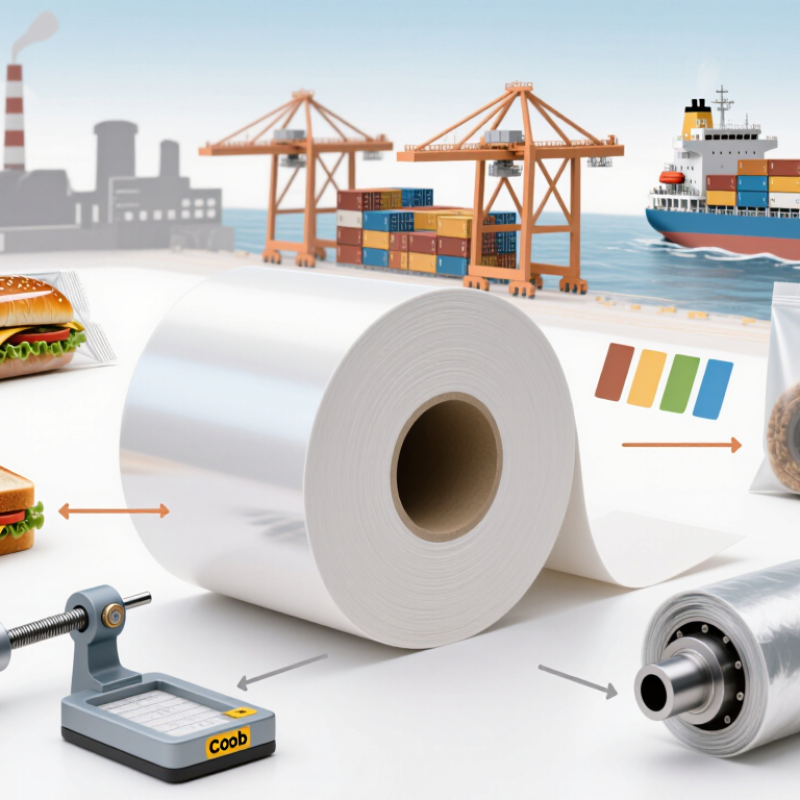
Sourcing Single Side PE Coated Paper globally is not simply a search for the lowest price. It requires a clear understanding of paper grade, polyethylene coating weight, roll dimensions, end use, and delivery conditions. A 12–18 gsm PE layer may suit food wrapping, retail bags, or industrial liners, but each application demands different barrier and converting performance. As paper scientist Dr. Martin A. Hubbe has noted, “Paper performance depends on the interaction between fiber structure, coating, and the intended use.” This principle should guide every supplier conversation.

Reliable sourcing begins with measurable specifications. Request the base paper GSM, PE thickness, moisture content, Cobb value, heat-sealing range, roll diameter, and core size. Ask for recent certificates of analysis, product samples, and food-contact documentation when required. A supplier may offer a bright white sheet, yet the coating can crack during folding. A heavier grade may look safer, but it can increase freight costs and reduce machine efficiency. Small details matter.

Global procurement also involves factory audits, export experience, packaging protection, payment terms, and realistic lead times. Confirm whether the mill can maintain consistent coating across wide rolls. Check how rolls are wrapped before facing humid sea transport. Not every low quotation is a saving. I have seen sourcing plans fail because one specification was left open: coating side, winding direction, or tolerance. The process is rarely perfect. Still, disciplined comparisons, trial orders, and transparent communication can reduce surprises and build a dependable international supply chain.
How to Source Single Side PE Coated Paper Globally?

Define Single-Side PE Paper: 40–300 g/m² Base and 8–20 g/m² PE

Sourcing single-side PE coated paper begins with a precise specification. The base paper should weigh 40–300 g/m². The polyethylene layer should add 8–20 g/m². This range affects stiffness, sealing behavior, moisture resistance, and total cost. A 40 g/m² base feels light and flexible. A 300 g/m² base supports rigid trays and heavier contents. Small changes matter.

The PE coating should cover one side evenly, without pinholes, edge gaps, or curling. Buyers should request coating-weight test results, basis-weight records, moisture data, and heat-sealing performance. ISO 536 defines paper grammage testing, while ISO 287 supports moisture measurement. These tests make supplier comparisons less subjective. They do not replace production trials.

Global demand adds complexity. FAO forestry statistics place annual worldwide paper and paperboard production near 400 million tonnes in recent years. CEPI reported about 79.5 million tonnes of paper and board production among its member countries in 2023. Those figures show a large supply base, but not every mill can produce stable 8–20 g/m² PE coverage. Ask for roll width, core size, minimum order quantity, production lead time, and export packaging details. Trial rolls are essential. Laboratory results can look perfect, yet a converter may still see blocking or poor folding. I have found that specifying “food-grade” alone is too vague. Request the applicable compliance documents for the destination market, and check whether the paper side, coating side, inks, and adhesives are covered. Mistakes often begin with an incomplete specification.

Set Technical Specifications: ISO 536 Grammage and Cobb60 Water Absorption

When sourcing single side PE coated paper globally, define the base paper before comparing suppliers.

ISO 536:2019 measures grammage in grams per square metre. It helps buyers compare roll weight, stiffness, and converting performance.

Request the average value and tolerance, not only “food-grade paper.” For example, a specification may require 180 g/m² with a stated tolerance. Confirm whether this value includes the polyethylene layer. That detail is often missed.

Cobb60 measures water absorbed by the paper surface after 60 seconds. ISO 535:2023 provides the recognized test method.

Test the uncoated side separately from the PE-coated side. A low Cobb60 value usually supports moisture resistance, but it does not prove complete barrier performance.

Target values must match cup forming, cold storage, printing, and sealing conditions. Do not copy a supplier’s target blindly. Condition samples near 23°C and 50% relative humidity before testing, following ISO 187 principles.

Ask for test location, sample direction, test date, and laboratory method. CEPI’s 2023 preliminary statistics recorded about 79.5 million tonnes of European paper and board production, showing the scale of this supply chain.

Yet large volume does not guarantee uniform coating weight. Request three production-lot samples. Check edge curl, coating pinholes, and Cobb60 variation across the sheet. Small differences can become visible during folding.

My own sourcing preference is simple: approve performance data first, then negotiate price. Sometimes, the cheapest roll creates the most expensive rejection.

Qualify Global Suppliers: FSC Certification, ISO 9001, and 3-Audit Checks

How to Source Single Side PE Coated Paper Globally?

Qualify Global Suppliers: FSC Certification, ISO 9001, and 3-Audit Checks

Global sourcing starts with evidence, not attractive samples. I ask suppliers for a valid FSC certificate and verify its scope, holder, and expiry date. The certificate should cover the relevant paper products and trading activities. An FSC claim without chain-of-custody details deserves careful questioning. Paper rolls may look identical, yet their fiber sources can differ.

ISO 9001 also needs practical checking. I review the certificate scope, audit status, corrective actions, and quality records. A supplier should explain how it controls basis weight, PE coating thickness, moisture, curl, and adhesion. During sampling, I measure coating uniformity across the roll width. Small edge variations can create sealing problems later. Documents help, but production behavior matters more.

I use three audits. The desk audit checks certificates, specifications, test reports, and export records. The factory audit examines coating lines, calibration labels, storage conditions, and rejected-roll handling. The pre-shipment audit confirms roll width, GSM, packaging, labels, and random test results. I once accepted a strong sample after a rushed factory review; the first shipment showed uneven coating. That mistake changed my process. I now compare retained samples, batch records, and loading photos before approving cargo. Suppliers should welcome these checks, although some may find them inconvenient. That reaction itself provides useful information.

Compare Landed Costs: MOQ, Incoterms, 20–25-Ton Containers, and Lead Times

When sourcing single side PE coated paper globally, compare landed cost rather than the quoted ton price. A low offer may hide higher freight, port charges, or inland delivery expenses. Request pricing by metric ton, roll or sheet size, basis weight, PE coating thickness, and packaging format. MOQ often changes with width, coating color, and production scheduling. Small gaps matter.

For many shipments, a 20–25-ton container offers a useful cost benchmark. However, the usable payload depends on local road limits, pallet weight, and container type. Calculate this formula: paper value, freight, insurance, duties, port fees, customs clearance, and final delivery. Under FOB, the buyer controls ocean freight but carries more coordination risk. CIF simplifies the initial quote, yet destination charges can remain unclear. DAP may improve delivery visibility, but the supplier’s margin can raise the total cost.

Lead time should include production, quality inspection, booking, transit, customs, and warehouse receiving. A realistic production window may be two to four weeks, while ocean transit varies by route and season. Ask for a shipment schedule, tolerance data, packing photos, and recent quality records. Verify coating adhesion, moisture protection, roll diameter, and core size before approving mass production. My own cost comparisons have sometimes missed demurrage or rework charges. That is a useful warning. Leave contingency room, especially when comparing smaller MOQs with full-container orders.

Verify Compliance and Delivery: Food-Contact Tests, AQL Sampling, and QC Records

How to Source Single Side PE Coated Paper Globally?

Paper packaging demand is substantial. CEPI’s 2023 statistics recorded about 79.5 million tonnes of paper and board production in Europe. This scale makes supplier verification essential, especially for food-contact applications. Request a declaration of compliance for the coated side, base paper, inks, adhesives, and processing aids. Confirm testing against the destination market’s requirements, such as EU Regulation 1935/2004 or relevant FDA food-contact provisions. Test the finished paper, not only raw materials. Measure overall migration, specific migration, odour, taste transfer, and coating adhesion. Water-based and fatty-food simulants may expose different weaknesses. One certificate is not enough.

Sampling must follow an agreed plan. ISO 2859-1 provides a practical framework for lot inspection and AQL selection. Many buyers use separate limits for critical, major, and minor defects. For example, a contract may set AQL 1.0 for major defects and AQL 2.5 for minor defects. These values are examples, not universal rules. Define them before production. Inspect pinholes, coating skips, wrinkles, roll width, moisture, and winding tension. A small defect can become a leaking cup.

Keep complete QC records. Each roll should link to a production lot, coating weight, test results, operator checks, and pallet photographs. Record retained samples and corrective actions. In practice, documents are sometimes complete while edge damage is ignored. That is a mistake. Review the evidence, then inspect the material. Suppliers should also provide shipment inspection reports, packing details, and traceability within 24 hours. Perfect systems are rare. Regular review is still necessary.

How to Source Single Side PE Coated Paper Globally? - Verify Compliance and Delivery: Food-Contact Tests, AQL Sampling, and QC Records
Control Area Checkpoint Acceptance Criteria / Reference Value Verification Method Sampling or Frequency Required Record Release Gate
Product Definition Paper construction Single-side polyethylene coating; coated side and uncoated side clearly identified on the specification and roll label. Approved technical specification, cross-section inspection, and production-line verification. Each new grade and every production lot. Signed product specification and lot traceability sheet. Required
Product Definition Basis weight Target value agreed in the purchase specification; common commercial grades include approximately 60–350 g/m². Tolerance to be specified by grade. Conditioned laboratory weighing according to ISO 536 or an equivalent validated method. At least 5 specimens per sampled roll; each production lot. Basis-weight test report with lot number and instrument ID. Pass / Fail
Coating Quality PE coating weight Target coating weight stated on the technical specification; a typical control range is 10–30 g/m², with the agreed tolerance applied to the target. Gravimetric determination or validated infrared/online coating measurement, correlated to laboratory results. Beginning, middle, and end of each jumbo roll or production run. Coating-weight profile and laboratory confirmation record. Pass / Fail
Coating Quality Coverage and appearance No exposed paper areas, pinholes, blisters, delamination, blocking, wrinkles, or visible contamination on the coated surface. 100% online visual inspection plus light-table examination of retained samples. Continuous online inspection; retained sample per roll. Visual inspection log, defect map, and retained sample reference. Pass / Fail
Functional Performance Heat-seal performance Seal temperature, dwell time, pressure, and minimum seal strength must be defined for the intended converting process and validated before approval. Laboratory seal-curve testing and production-trial verification using the customer’s equipment or an agreed simulator. Each new grade; after any resin, paper, coating, or process change. Seal-curve report and approved process window. Required
Functional Performance Water and grease resistance Performance must meet the end-use requirement for the specified food type, contact duration, temperature, and package construction. Water absorption by ISO 535 Cobb method and grease-resistance testing using an agreed method appropriate to the application. Each qualification lot and periodic verification during production. Cobb result, grease-resistance result, and application test record. Pass / Fail
Food Contact Regulatory framework review Confirm the destination-market requirements, including Regulation (EC) No 1935/2004, Regulation (EC) No 2023/2006 GMP, applicable national paper rules, and relevant requirements for the polyethylene layer. Regulatory gap assessment completed by a qualified food-contact compliance reviewer. Before approval and whenever legislation or formulation changes. Regulatory matrix, compliance declaration, and change-control history. Required
Food Contact Overall migration For applicable plastic-layer testing in the European market, the general overall migration limit is 10 mg/dm² under the relevant test conditions. The exact simulant and exposure condition must represent the intended use. Testing by an ISO/IEC 17025-accredited laboratory using applicable EU food-contact methods and test conditions. Initial qualification, periodic verification, and after material or process changes. Complete laboratory report showing simulant, time, temperature, and result. Within Limit
Food Contact Specific migration and extractables Substances intentionally used in paper, coating, inks, adhesives, and processing aids must be identified and assessed against the destination-market limits. Targeted chemical analysis based on the formulation and supplier declarations; additional testing when risk assessment requires it. Initial qualification and after any formulation, supplier, or process change. Bill of substances, supplier declarations, risk assessment, and test reports. Required
Food Contact Odour and sensory transfer No unacceptable odour or taste transfer under the intended food-contact conditions. Organoleptic evaluation using an appropriate validated method and representative package construction. Initial qualification and complaint investigation. Sensory test record, panel conditions, and sample identification. Pass / Fail
Sampling Plan Lot definition and inspection level Define one production lot by grade, coating formulation, machine run, and agreed quantity. Use ISO 2859-1 or an equivalent attribute-sampling plan. Purchase quality agreement and pre-shipment inspection plan. Each shipment or production lot. Sampling plan showing lot size, sample size, and acceptance numbers. Required
Sampling Plan AQL classification Typical buyer-defined plan: critical defects AQL 0; major defects AQL 1.5; minor defects AQL 2.5. Final values must be agreed before purchase. Randomized roll, sheet, and surface inspection against the approved defect catalogue. Normal inspection, General Inspection Level II, unless risk requires otherwise. Inspection report with defect counts, photos, and disposition. Accept / Reject
Packaging & Logistics Roll or sheet protection Packaging must protect against moisture, dust, crushing, telescoping, edge damage, and contamination during international transport and storage. Packaging audit, pallet inspection, moisture-indicator review where specified, and loading photographs. Every shipment; inspect before container sealing. Packing list, pallet map, loading checklist, and seal record. Pass / Fail
Traceability Lot identification Each roll or pallet must show grade, basis weight, coating side, coating weight, production date, lot number, net weight, and destination handling information. Document review and label-to-record reconciliation. 100% of rolls or pallets before dispatch. Label register, batch record, and certificate of analysis. Required
Delivery Control On-time, in-full performance Recommended supplier KPI: at least 95% of confirmed deliveries on time and complete, measured monthly against the agreed requested delivery date. Purchase-order, booking, dispatch, and receipt-date reconciliation. Every shipment; summarized monthly or quarterly. OTIF dashboard, delay reason code, and corrective-action record. Target ≥95%
Release Documentation Pre-shipment document pack Provide certificate of analysis, food-contact declaration, test reports where required, packing list, commercial invoice, lot traceability, and inspection release. Document completeness check before shipment authorization. Every shipment. Controlled electronic document pack linked to the shipment number. Required
Change Control Material or process changes Advance written notification and reapproval are required for changes to paper furnish, polyethylene resin, additives, inks, adhesives, coating weight, production site, or critical process conditions. Supplier change-notification procedure and risk-based requalification. Whenever a change is proposed; annual declaration recommended. Change notice, impact assessment, revised declaration, and approval record. Required
Nonconformance Corrective and preventive action Critical issues require immediate containment; major issues require a documented root-cause analysis and corrective-action plan with agreed closure dates. 8D or equivalent corrective-action review supported by objective evidence. Each confirmed nonconformance or customer complaint. Nonconformance report, root-cause analysis, corrective action, and effectiveness check. Closed / Verified
Note: Numerical tolerances, AQL values, migration conditions, and performance limits should be finalized in the purchase specification after confirming the destination market, food type, contact time, temperature, converting process, and final package design.

FAQS

What evidence should I request from a global paper supplier?

Request valid forest-sourcing and quality-management certificates. Check their scope, holder, issue date, and expiry date. Ensure they cover the actual paper products. A certificate without traceability details needs careful review.

How can I verify a supplier’s quality controls?

Ask how they control paper weight, coating thickness, moisture, curl, and adhesion. Review audit status, corrective actions, and quality records. Production behavior matters more than attractive documents.

What should a coating sample inspection include?

Measure coating uniformity across the roll width. Check the edges carefully. Small variations can cause sealing problems later. Compare retained samples with current production samples.

What does a three-stage supplier audit involve?

The desk audit reviews certificates, specifications, test reports, and export records. The factory audit checks coating lines, calibration labels, storage, and rejected rolls. The pre-shipment audit confirms dimensions, packaging, labels, and random tests.

Which factory details deserve special attention?

Inspect calibration labels on testing equipment. Check whether rolls are protected from moisture. Review rejected-roll handling and batch records. Loading photos can reveal rushed packing.

How should I compare supplier prices?

Compare landed cost, not only the quoted ton price. Include paper value, freight, insurance, duties, port fees, clearance, and final delivery. Small gaps matter. A cheaper quote may hide expensive inland charges.

What information can change the minimum order quantity?

Width, coating color, production scheduling, and packaging format can affect the minimum order. Ask for pricing by ton, roll size, sheet size, paper weight, and coating thickness. Smaller orders may carry higher unit costs.

How should I evaluate container loading?

A 20–25-ton container can provide a useful cost benchmark. Confirm payload limits, pallet weight, container type, and local road restrictions. Do not assume the full nominal weight is usable.

How do delivery terms affect sourcing decisions?

Under FOB, the buyer manages ocean freight and more coordination. CIF may simplify the initial quote, but destination charges can remain unclear. DAP may improve delivery visibility, though its margin can increase total cost.

What should a realistic lead-time estimate include?

Include production, inspection, booking, transit, customs, and warehouse receiving. Production may take two to four weeks. Ocean transit varies by route and season. I have missed demurrage before. Leave contingency room.

Conclusion

Sourcing Single Side Pe Coated Paper globally requires a clear technical definition and a structured supplier-evaluation process. Buyers should specify a base paper range of 40–300 g/m² with an 8–20 g/m² polyethylene coating applied to one side. Key performance requirements should include grammage measured according to ISO 536, Cobb60 water absorption, coating uniformity, converting performance, and suitability for the intended packaging application.

Supplier qualification should consider FSC certification, ISO 9001 systems, production capability, and documented three-stage audits covering materials, manufacturing, and final inspection. A realistic landed-cost comparison must include MOQ, Incoterms, container utilization of approximately 20–25 tons, freight, and lead times. Before shipment, buyers should confirm food-contact test results where applicable, use AQL-based sampling, and review complete QC records. This approach helps reduce quality risks, improve cost visibility, and establish a reliable international supply plan for Single Side Pe Coated Paper.

Sienna

Sienna

Sienna is a skilled marketing professional with a deep expertise in our company’s core products and services. With a passion for innovation and detail, she plays a pivotal role in crafting insightful blog posts that not only highlight the unique features of our offerings but also provide valuable......